No products in the cart.

When you see a piece of jewelry on someone else and think, “Wow, that looks stunning… but it doesn’t look the same on me,” you’re not imagining it.
The secret isn’t just the design. It’s also your skin tone, undertone, and the metal colour – usually silver or gold.
In this deep guide, we’ll break down silver vs gold jewelry in a simple, practical way so you can decide what truly flatters your skin. You can then choose the right pieces from your collection or from brands like The Silver Soul with a lot more confidence.
1. Skin Tone vs Undertone – What Actually Matters?
Most people confuse skin tone and undertone. They’re related, but not the same:
- Skin tone = How light or dark your skin appears on the surface (fair, medium, wheatish, dusky, deep).
- Undertone = The subtle colour under your skin (cool, warm, neutral).
This doesn’t change much even if you tan.
👉 In jewellery decisions, undertone matters more than skin tone.
You can have:
- Fair, warm skin
- Medium, cool skin
- Deep, neutral skin
…and each one reacts differently to silver and gold.
2. How to Find Your Undertone (3 Easy Tests)
You don’t need any fancy tools. Just try these simple checks at home.
2.1 Vein Test
Look at the veins on the inside of your wrist in natural light (not under yellow bulbs).
- If veins look blue or purplish → You likely have a cool undertone.
- If veins look greenish or olive → You likely have a warm undertone.
- If you can’t clearly decide / see both colours → You might be neutral.
2.2 White vs Cream Test
Hold a pure white cloth and a cream/off-white cloth next to your face (no makeup, natural light).
- If pure white makes your skin look brighter and fresh → Cool undertone.
- If cream/off-white looks better, and pure white washes you out → Warm undertone.
- If both look okay → Neutral undertone.
2.3 Jewelry Test (Your Instant Answer)
Think about this honestly:
- When you wear silver jewelry, do people say you’re glowing, looking fresh or “this really suits you”?
- When you wear gold jewelry, do you feel more alive, rich, and warm… or dull and tired?
If:
- Silver suits you more → cool or neutral undertone.
- Gold suits you more → warm or neutral undertone.
- If both look good → you’re probably neutral (lucky, you can wear anything!).
3. How Silver & Gold Behave on Different Undertones
3.1 Cool Undertones (Pink, Red, or Bluish Tinge)
Typical signs:
- You burn easily in the sun, then may tan.
- You look better in blue, grey, jewel tones (emerald, royal blue, wine).
- Lips naturally have a rosy/pinkish tone.
Best metal:
- Silver almost always looks more flattering.
It matches the coolness of your undertone and makes your skin look brighter and fresher.
How gold behaves:
- Yellow, rich gold can sometimes clash or make your skin look slightly sallow or dull.
- If you want to wear gold, softer rose gold or very light gold can be more forgiving.
For customers of a silver brand like The Silver Soul, cool undertones are exactly where silver jewelry looks naturally luxurious and effortless.
3.2 Warm Undertones (Golden, Olive, or Peachy Tinge)
Typical signs:
- You tan easily and rarely burn.
- Earthy colours like mustard, rust, olive, coral, and warm browns look great on you.
- Your natural lip colour is more peachy or brownish than pink.
Best metal:
- Gold (especially yellow or warm-toned gold) usually enhances your warmth and gives you a rich, glowing look.
- Indian traditional yellow gold, antique gold, and temple jewelry tend to look amazing on warm undertones.
How silver behaves:
- Can still look good – especially if you choose warmer silver styles:
- Silver with warm-coloured stones (amber, garnet, topaz, champagne)
- Oxidised silver with earthy outfits
- But if silver is very cool, icy and shiny, it may sometimes make your skin look a little flat.
However, warm undertone doesn’t mean “no silver ever” – it just means: choose silver pieces and outfit colours that complement your warmth (we’ll get to that).
3.3 Neutral Undertones (Mix of Warm & Cool)
Typical signs:
- Both blue and green veins visible.
- You look good in both silver and gold.
- You can wear many colours without looking “off”.
Best metal:
- You can wear both silver and gold, and even mix them easily.
- Neutral tones are flexible; you can switch based on:
- Outfit colour
- Occasion
- Personal mood or trend
For you, it becomes less about “which is allowed?” and more about “what mood do I want?”
4. Silver vs Gold on Different Skin Depths (Fair, Medium, Deep)
Once you know your undertone, consider how light or deep your skin tone is.
4.1 Fair to Light Skin
- Cool + Fair:
- Silver looks naturally elegant and soft.
- Very yellow gold may look too harsh; rose gold can be a good middle ground.
- Warm + Fair:
- Light gold, champagne gold, and delicate silver can all work.
- Very icy silver might sometimes overpower – pair it with warm-coloured outfits.
4.2 Medium / Wheatish Skin (Very common in India)
- Cool + Medium:
- Silver jewellery looks incredibly striking – especially against navy, black, berry shades.
- White metals (silver, platinum-look) give a modern, premium vibe.
- Warm + Medium:
- Gold highlights the warmth beautifully, especially with Indian ethnic wear.
- Silver can still work very well if you bring in warm tones via clothing or stones.
4.3 Dusky / Deep Skin
- Cool + Deep:
- Silver can look sharp and high-contrast in a very stylish way.
- White metals look luxe and editorial, especially with jewel tones.
- Warm + Deep:
- Deep yellow or antique gold looks royal and rich.
- Oxidised silver is a strong choice – it doesn’t look too bright but still has presence.
Remember: there is no rule saying dusky skin can’t wear silver or fair skin can’t wear gold. It’s always about the combination of undertone + outfit + metal.
5. Outfit Colours: When Silver Wins, When Gold Wins
If you’re still confused, use your inner stylist: look at what you’re wearing.
5.1 Colours that Love Silver
Silver jewelry looks especially elegant with:
- Black, white, grey
- Navy, cobalt blue
- Pastels (lavender, baby pink, mint, powder blue)
- Jewel tones (emerald, sapphire, burgundy, deep purple)
- Cool-toned prints and florals
- Denim (any wash)
These colours bring out the cool, clean shine of silver and make it look modern and fresh.
5.2 Colours that Love Gold
Gold jewellery shines with:
- Mustard, marigold yellow
- Rust, terracotta, burnt orange
- Olive, forest green
- Warm reds (brick, vermillion, tomato)
- Beige, camel, cream, ivory
- Traditional Indian prints & festive wear
These colours echo the warmth of gold, making the entire look cohesive and rich.
6. Can You Mix Silver and Gold? Yes – If You Do It Intentionally
You don’t have to choose one camp forever. Modern styling often combines metals.
6.1 When Mixing Works Best
Mixing looks best when:
- Your undertone is neutral, or
- Your outfit combines warm and cool tones, or
- You use one mixed-metal piece as the anchor (like a bracelet that has both silver and gold elements).
6.2 Simple Ways to Mix Metals
- Wear silver rings with a single gold band in the middle.
- Combine a silver chain with a gold pendant, or vice versa.
- Stack bracelets in both metals but keep the designs simple and clean.
Avoid making it look accidental. For example:
- Don’t wear too many loud gold pieces and one lonely tiny silver ring.
- Keep the overall style similar (minimal with minimal, boho with boho).
7. Choosing the Right Metal for Different Occasions
7.1 Daily Wear / Office
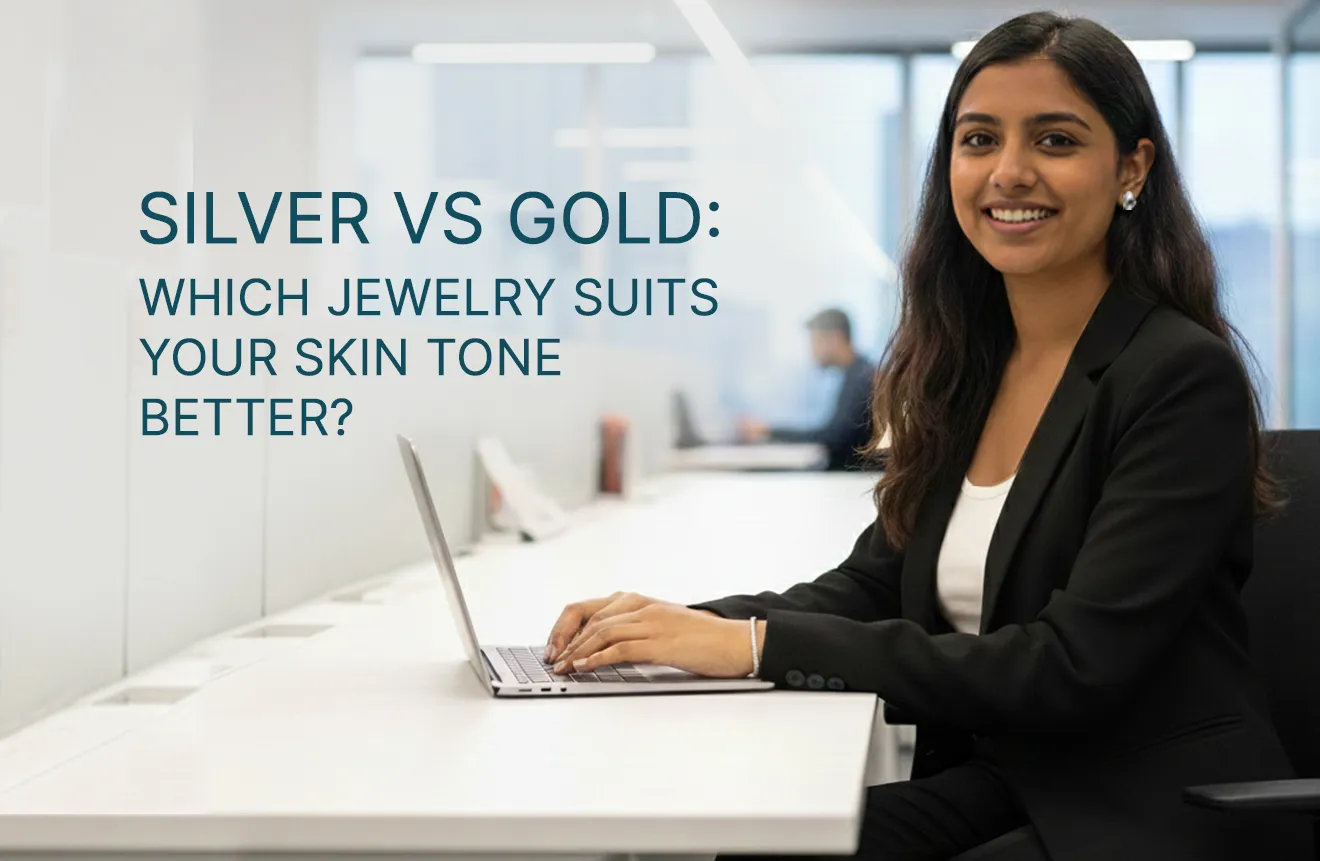
- Silver is often more subtle and modern, especially in work environments.
- Minimal silver pieces (like the ones from The Silver Soul) work beautifully with western office wear and smart-casual looks.
- If you’re warm-toned but love silver, pair it with warm outfits (olive, maroon, beige) to keep harmony.
7.2 Festive & Weddings
- Gold naturally fits traditional Indian occasions.
- However, oxidised silver jewelry or finely crafted sterling silver can give a royal, contemporary twist to sarees and lehengas.
- If your undertone is cool, silver can often look more flattering in photos than heavy yellow gold.
7.3 Special Events & Photoshoots
- Think about lighting – bright studio lights and flashes can make gold look very yellow.
- Silver reflects light cleanly and can add a glow without overpowering your features.
8. Is Silver Always “Cool” and Gold Always “Warm”? Not Exactly.
There are nuances:
- Warm silver:
- Oxidised silver
- Silver combined with warm-toned stones (citrine, garnet, champagne, brown)
- Silver pieces on earthy cords or leather
- Cool gold:
- Very pale yellow gold
- Mixed with white stones or pearls
So even if your undertone suggests one metal, you can still play with the temperature of design, stones, and finishes.
9. Practical Way to Decide: A Simple 3-Step Method
If you’re still not sure whether to pick silver or gold for yourself, follow this simple approach:
Step 1: Check Your Undertone
Use the vein + white-cream + jewellery test. Decide: cool, warm, or neutral.
Step 2: Try Basic Pieces in Each Metal
Take:
- One simple silver necklace or earring
- One simple gold equivalent
Try each with:
- Bare face (no makeup)
- Your go-to everyday outfits
See which one makes your eyes, skin and smile look more alive.
Step 3: Decide Your “Base Metal” (and a Backup)
- Choose one metal as your base (what you’ll wear daily most of the time).
- Choose the other metal as your accent (for certain outfits or moods).
For many people:
- Cool undertones → Base: silver | Accent: gold/rose gold
- Warm undertones → Base: gold | Accent: silver/oxidised
- Neutral undertones → Either base, mix freely
10. The Bottom Line: It’s About Harmony, Not Rules
“Silver vs Gold: Which jewelry suits your skin tone better?” doesn’t have one strict answer.
- If you have cool undertones, silver will usually be your easiest, most flattering choice.
- If you have warm undertones, gold will typically enhance your natural glow.
- If you’re neutral, you’re free to play between both, or even mix them.
But beyond all theory, the best test is your mirror:
- Which metal makes you feel more confident?
- In which metal do you catch yourself smiling more?
- Which metal do you instinctively reach for every day?
That’s the one that truly suits you.